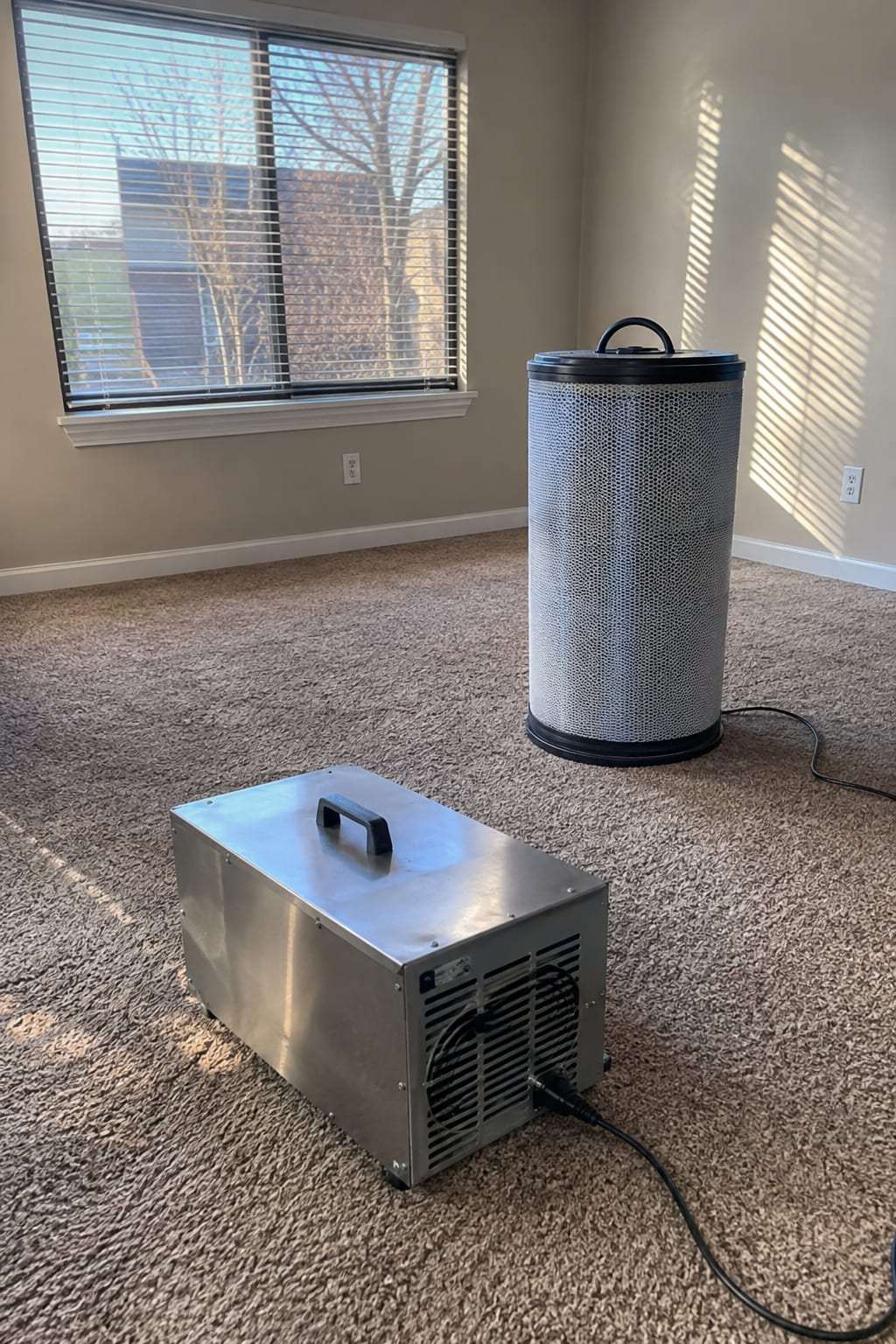
Holes cut for a grow exhaust
Fan and duct openings left in an exterior wall keep pulling odor and outdoor air through the house.
A guide for Denver-area homes, rentals and commercial space
Burnt cannabis leaves sticky resin on ceilings, carpet pad and return ducts. Fragrance and fresh paint sit on top of it and fail. The smell leaves when the residue does.
This website is a draft preview. No phone line or request form is connected yet.
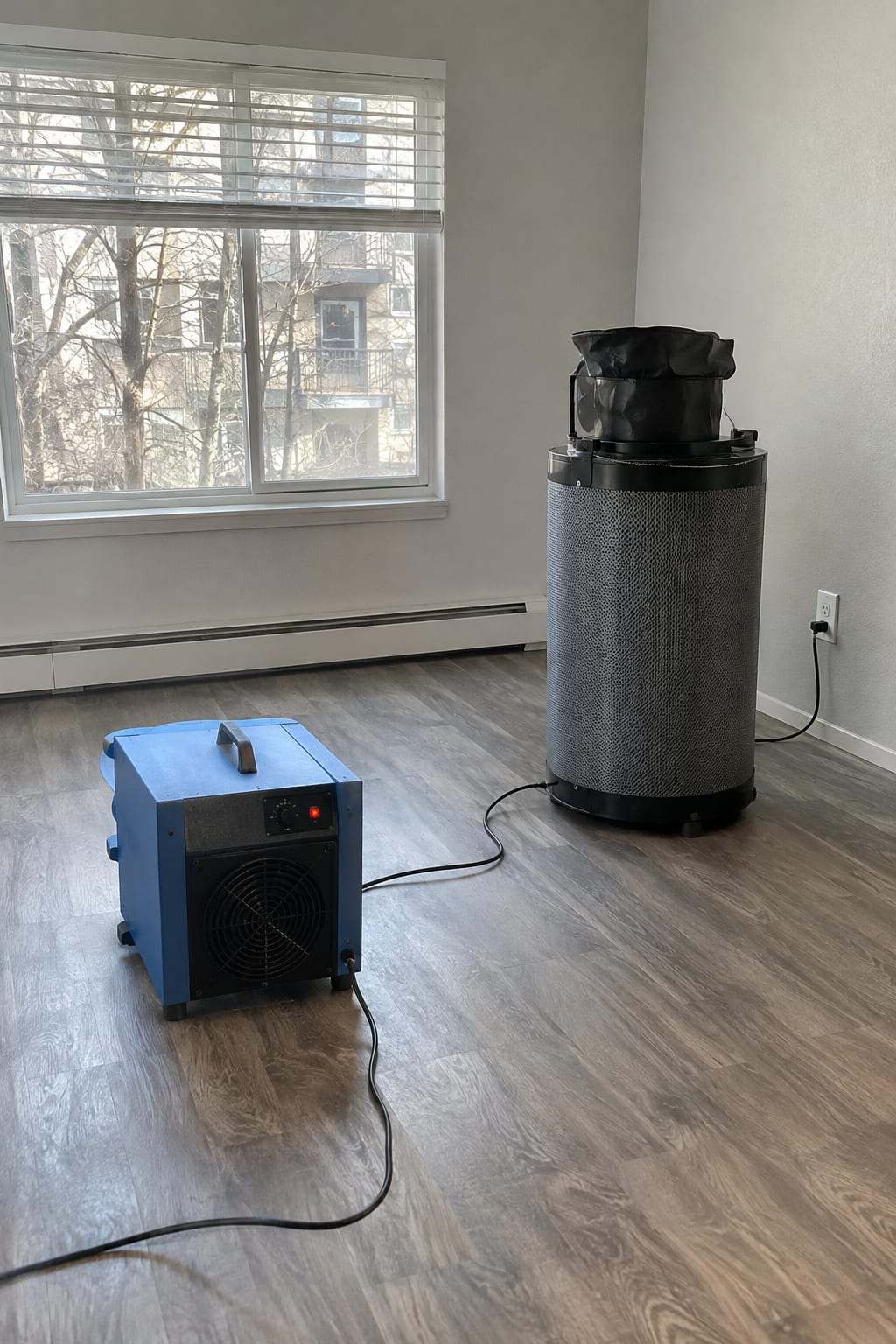
Cannabis smoke carries resin and aromatic terpenes. Both settle on the first cool surface they meet and soak into anything porous: drywall paper, carpet backing, sofa foam, the filter in your return air. Paint over that film lets the smell bleed back through within weeks.
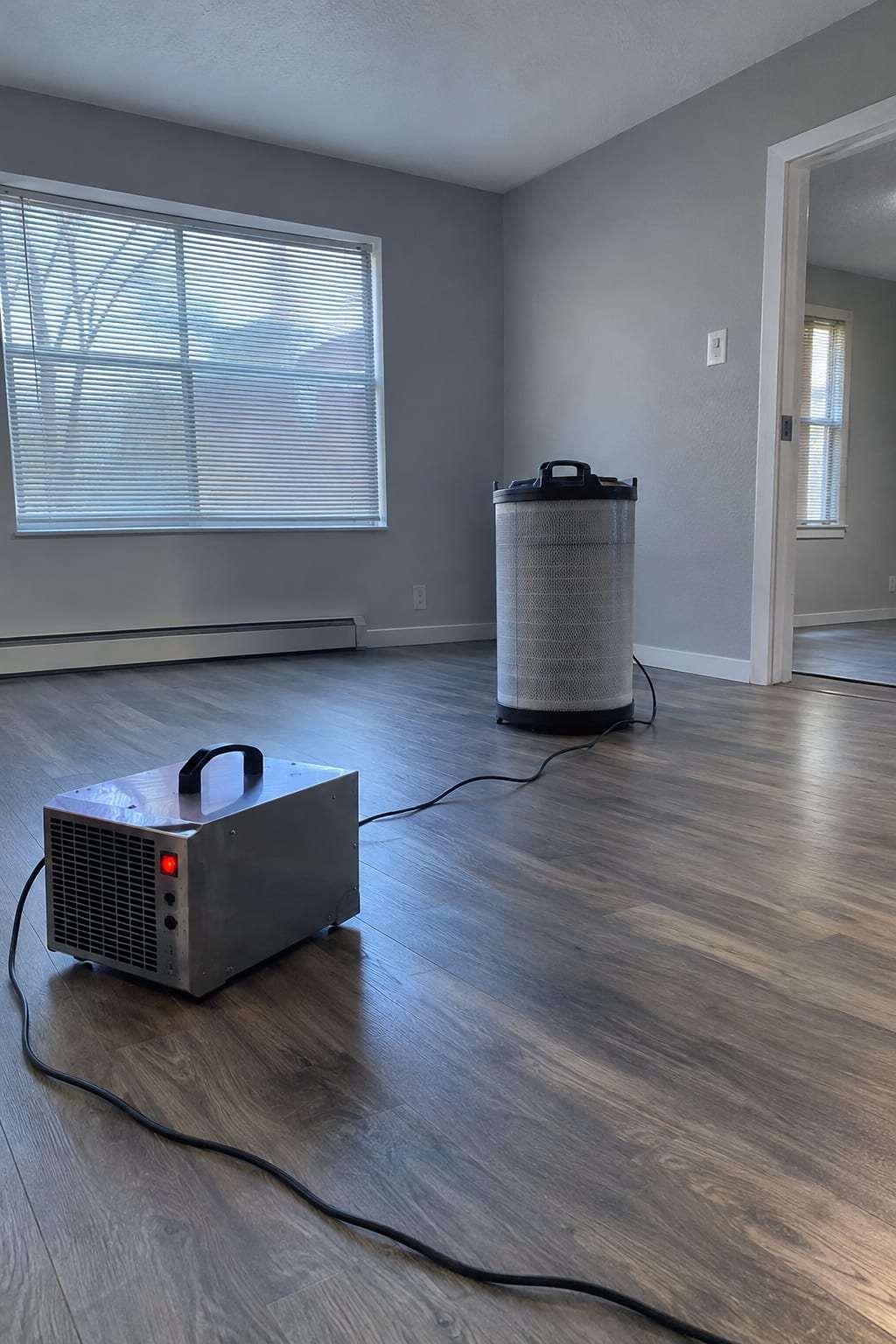
Lasting removal works from the source out. Wash residue off hard surfaces, launder or replace fabric, change filters and clean the air pathways you can reach, and seal what still holds odor. When the job calls for it, a controlled chlorine dioxide treatment runs while the space sits empty.
Cannabis film rarely stains walls yellow the way tobacco does, so people underestimate it. Each bar ranks how much a surface tends to hold.
Smoke rises, so the film is usually heaviest overhead.
The air system pulls smoke in and sends it to every room it serves.
Fabric and foam soak up odor and give it back slowly as rooms warm.
Shut doors trap the smell and keep it stale.
They hang in the airflow and collect film on every slat and fold.
Residue sits on top and wipes off with a degreasing wash.
The bars are relative, based on how smoke residue behaves in most rooms. They are not measurements of your property.
The smoke clears in an hour. The resin keeps smelling for months.
Wiping the walls handles the surface. These three spots decide whether the smell comes back.
Fan and duct openings left in an exterior wall keep pulling odor and outdoor air through the house.
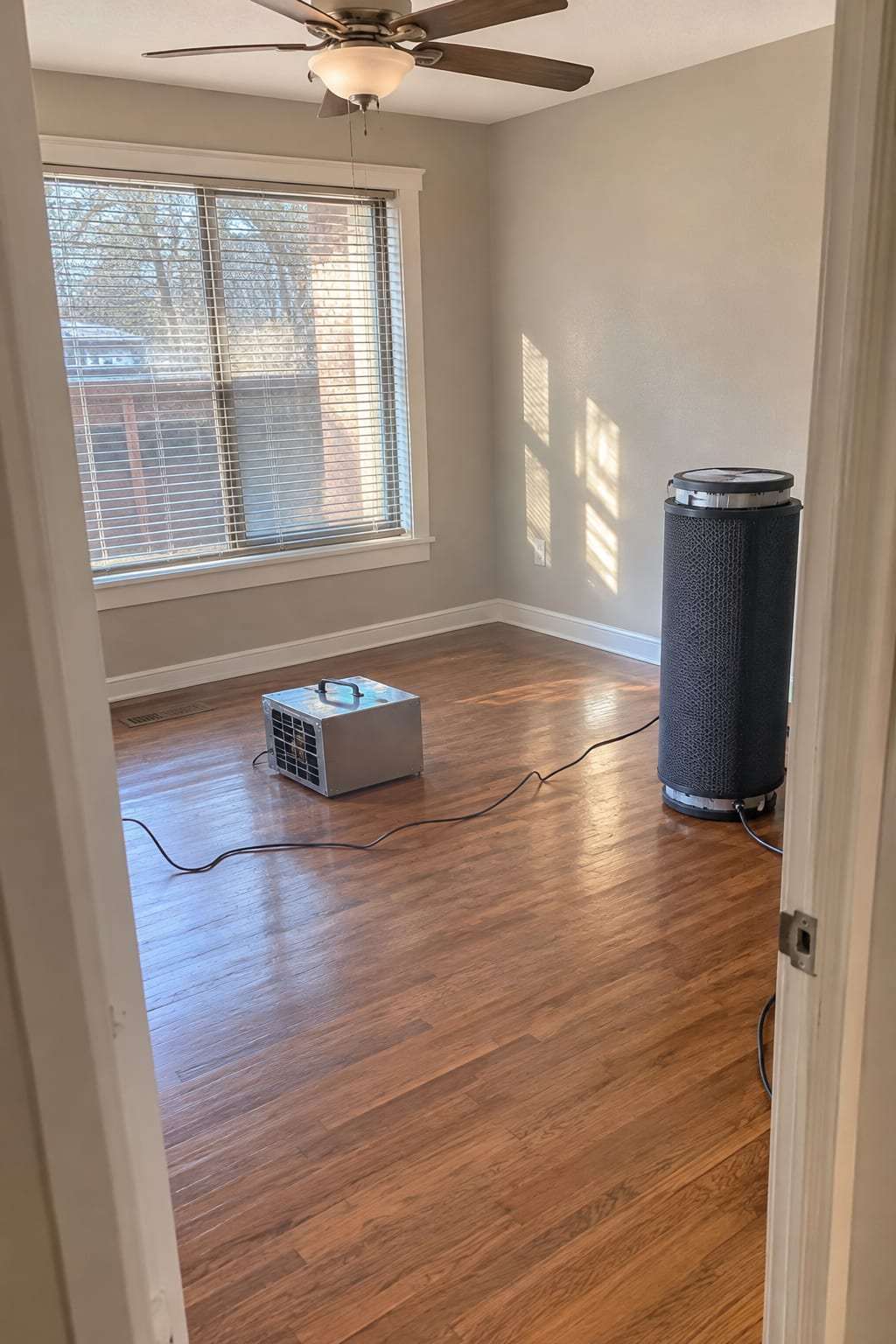
Whatever the system breathes in, it delivers to every room on the run.
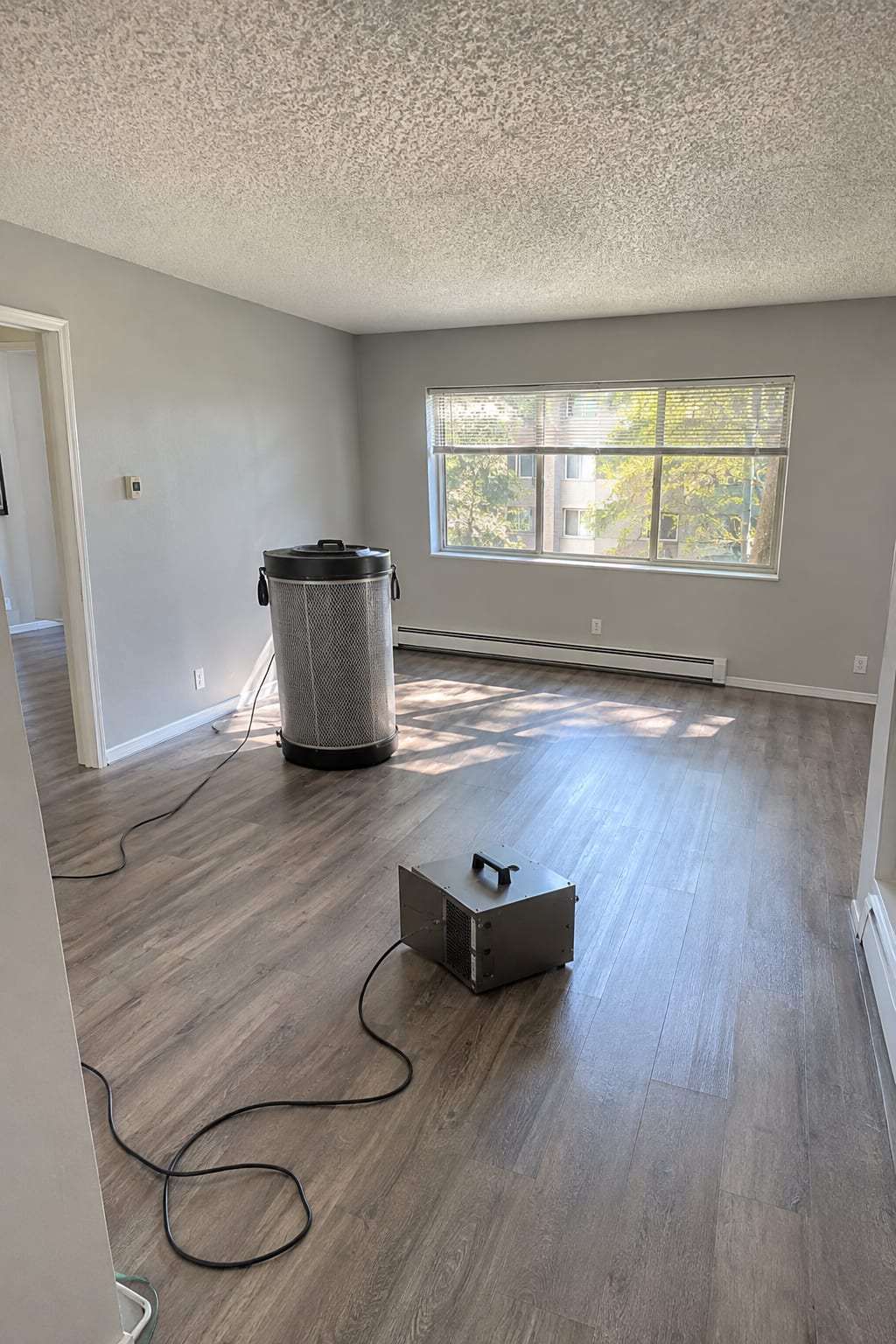
Moisture comes out before deodorizing starts. Treating odor over damp drywall wastes the money.
Colorado lets adults use cannabis, and leases and HOA rules can still ban smoking indoors. When a unit turns over after indoor smoking, the odor is a make-ready item like paint or carpet. In a multifamily building, smoke also travels between units, so a good assessment checks whether the source sits in the unit or next door.
Ask any provider to walk you through these five steps by name. Skipping the assessment means guessing at the scope.
Heavy, long-term smoking in a small space can leave odor in materials that cost less to replace than to treat. Carpet pad, blinds and some upholstery are the usual examples. A trustworthy provider tells you at the assessment, before you book treatment.
You describe where the smell is strongest, how long smoking went on and what you have tried.
Someone walks the space and lists the surfaces, fabrics and air-system parts that hold residue.
You get a list of what gets cleaned, sealed or removed, plus anything that could limit the result.
The provider cleans and treats sources, seals surfaces where needed, and treats the empty space as a whole if the scope calls for it.
You learn when to ventilate, when people and pets can come back, and when painting can start.
Guides and checklists on resin film, grow damage and rental turnovers.
Colorado voters legalized recreational cannabis in 2012, and retail sales started in 2014. Public consumption stays illegal, so most people smoke at home. That puts the residue in houses, apartments and condos, where landlords, buyers and building owners meet it at turnover or sale.
Odor from licensed cannabis businesses falls under separate rules from the City and County of Denver. This guide covers what stays inside a property after the smoking stops.
ZIP codes served: 80203 (Denver), 80218 (Denver), 80202 (Denver), 80205 (Denver), 80206 (Denver), 80204 (Denver), 80209 (Denver), 80211 (Denver), 80223 (Denver), 80216 (Denver), 80220 (Denver), 80246 (Denver), 80207 (Denver), 80212 (Denver), 80219 (Denver), 80214 (Denver), 80210 (Denver), 80230 (Denver), 80224 (Denver), 80221 (Denver), 80222 (Denver), 80266 (Denver), 80226 (Denver), 80238 (Denver), 80247 (Denver), 80010 (Aurora), 80232 (Denver), 80110 (Englewood), 80113 (Englewood), 80236 (Denver), 80033 (Wheat Ridge), 80030 (Westminster), 80231 (Denver), 80215 (Denver), 80003 (Arvada), 80002 (Arvada), 80045 (Aurora), 80227 (Denver), 80229 (Denver), 80237 (Denver), 80012 (Aurora), 80235 (Denver), 80239 (Denver), 80260 (Denver), 80004 (Arvada), 80014 (Aurora), 80123 (Littleton), 80249 (Denver).
Also nearby: 80121, 80031, 80120, 80111, 80011, 80228, 80005, 80122, 80233, 80017, 80419, 80640, 80234, 80021, 80015, 80013, 80112, 80241, 80128, 80129, 80401, 80022, 80126, 80020, 80007, 80453, 80465, 80130, 80124, 80454, 80018, 80019, 80602, 80023, 80016, 80127, 80457, 80125, 80601, 80131, 80403, 80026, 80134, 80137, 80108, 80516.
Both leave residue that keeps releasing smell. Cannabis film is resinous, often clear and easy to miss on a walkthrough. The fix follows the same rule: remove or neutralize it at the source.
Not for long. Paint over resin lets the odor bleed through. Wash the walls first, seal with an odor-blocking primer, then paint.
Usually. The system pulls smoke in and spreads it to every room. Replace the filter and clean or treat the air pathways you can reach.
A controlled chlorine dioxide treatment needs the space empty of people and pets. Before you schedule, ask how to prepare, how long the treatment dwells, how ventilation works and when you can go back in.
The odor, yes. Grow rooms often carry humidity damage or mold as well, and someone should evaluate and handle that first.
Stores sell ozone machines for that purpose, but ozone treats the air, not the resin on surfaces, and it can damage rubber and some finishes. Ask any provider whether they plan to use ozone or synthetic fragrance. A thorough job removes residue from surfaces and air pathways and adds a controlled chlorine dioxide treatment in the empty space when that fits.
Not always, and no honest provider promises it for every property. The result depends on how long smoking went on, what materials absorbed it and whether the source has stopped. A good assessment tells you what is realistic, which items may need replacing and how the result will be checked.
Stop smoking indoors, swap the HVAC filter, and get a written scope from a provider you have checked out before anyone sprays, seals or fogs.
Before you book anyone, ask whether they plan to use ozone or fragrance, and get the scope in writing.
This form is not connected. This website is a draft preview: no business has been confirmed to receive requests, so the fields below are switched off and nothing can be sent. In an emergency, call 911.