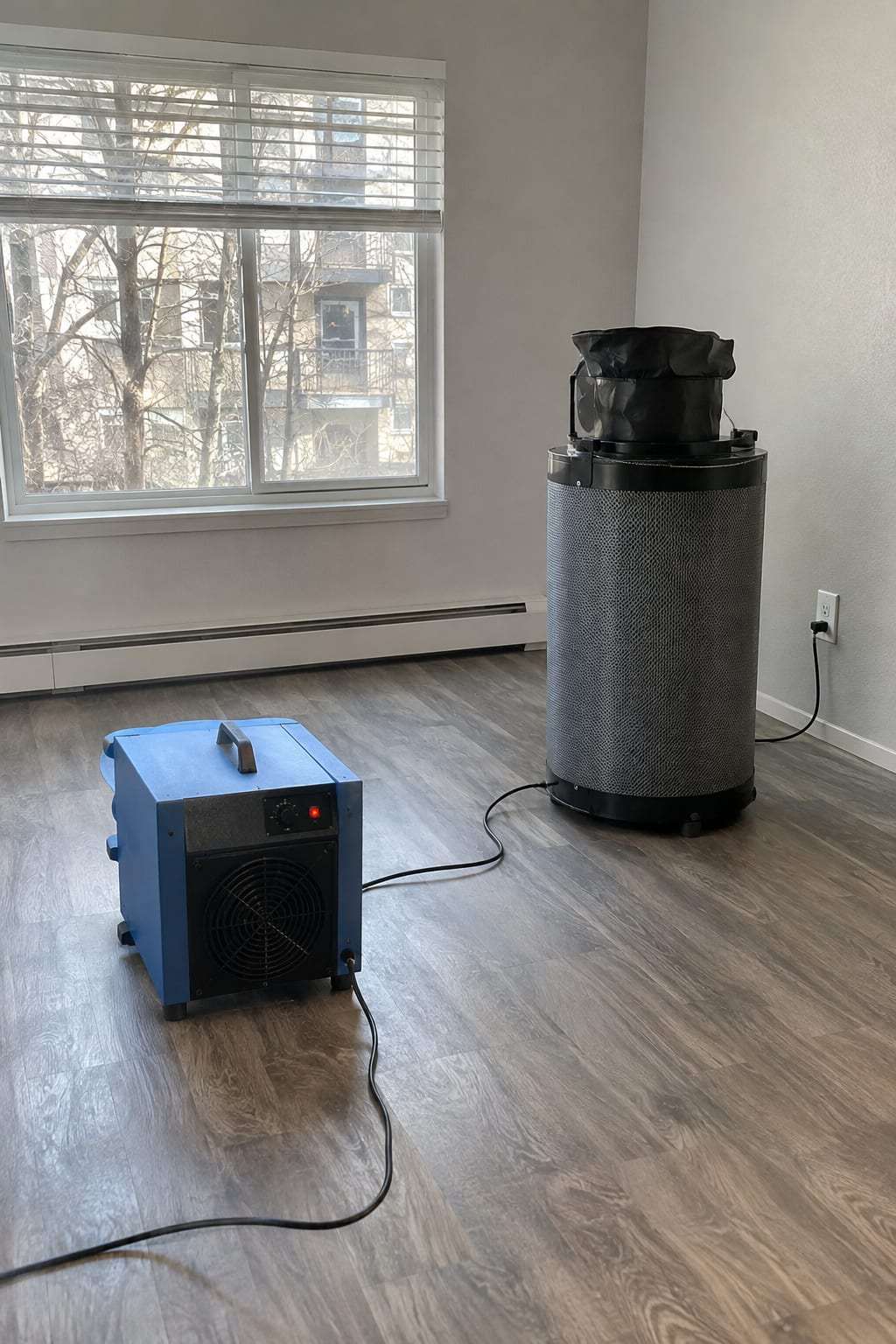
Why a kitchen holds this smell
Making edibles usually starts with decarboxylation, a low-temperature oven bake that activates cannabinoids, followed by hours of gentle simmering in butter or oil. Both steps release steam and aromatic compounds. Fat in the infusion is a perfect carrier, so the smell attaches to kitchen grease on the hood, the backsplash and the tops of cabinets.
Open floor plans make this harder. In many condos and remodeled houses, the kitchen opens to the living area, so odor drifts into couch fabric and curtains rather than staying near the stove. Small apartment kitchens may have a recirculating hood that only filters through a carbon pad and never vents outdoors, which means the smell stays in the unit.
People often switch the smell off with strong spices or simmer pots. That helps for an evening but rarely for a week, because the grease film underneath is still holding the original odor.
A cleaning order for the kitchen
Remove what can be washed
Take down hood filters, drip pans and removable knobs and wash them in hot soapy water.
Degrease the hood and upper cabinets
Use a degreasing cleaner on the hood exterior and the cabinet tops, where warm air leaves an invisible coating.
Wipe the walls near the stove
Work from top to bottom with a clean cloth, rinsing the cloth often to avoid redistributing grease.
Wash or replace soft items
Dish towels, curtains and nearby fabric chairs hold odor; launder what the label allows.
Ventilate and retest
Run the hood on its highest setting while cooking later and recheck smell in the morning.
Reducing odor the next time
Common questions
Do carbon hood filters absorb cannabis odor?
They can help for a time, but once saturated they stop working. Replace them as the maker recommends, and note that they do not replace outdoor venting.
General information for the Denver area, not a quote or professional advice. In an emergency, call 911.